Who Are You Without Your Labels?
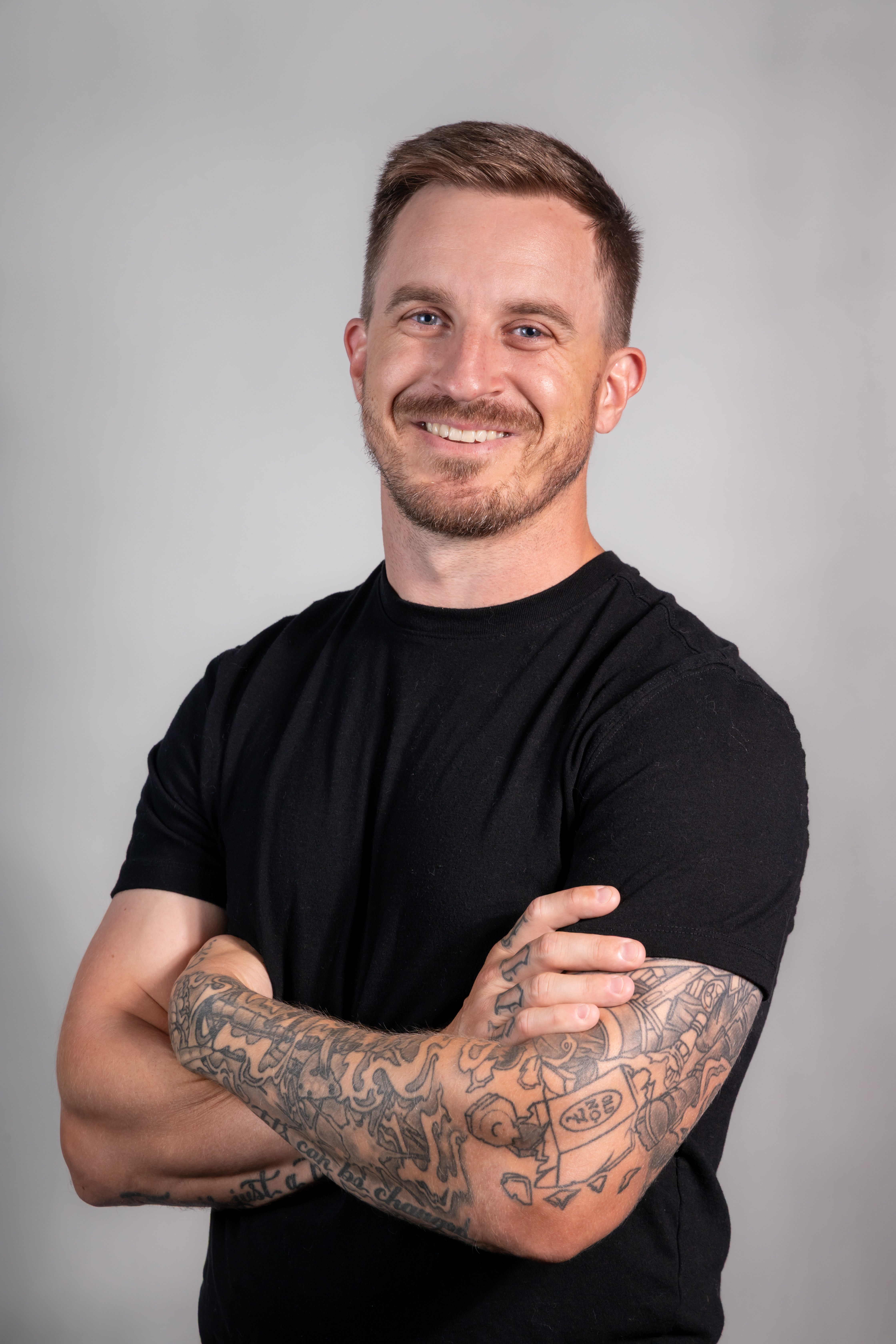
Who Am I When Nobody's Calling Me That Anymore?
I've been sitting with a question for a while now, and it doesn't get less powerful the more I answer it.
Who am I underneath all the roles I've been handed or built for myself?
Coach, husband, dad now too, former athlete, whatever title happens to be doing the talking that day. The more I dig into it, the more I realize almost everything else I care about is downstream of this one question.
Balance Is a Lie We Tell Ourselves
The idea of balance is, in my mind, an illusion, because if you want to excel in one area of life, you're going to sacrifice even a little bit in another, so it's never gonna be in perfect balance. And that’s ok….if you allow it to be.
I think most of us exhaust ourselves chasing a balance that was never actually available to us in the first place. What I've found instead, and what Jackie and I have built our whole relationship around, is integration. Harmonization. A synthesis of sorts.
I like those words better because balance implies some kind of even split, deposits and withdrawals, and life doesn't work that way. I golf once in a while, and a round with warm-up and everything gone is six hours out of my day, and that's never been a threat between us because we've always had a relationship built on going and doing our own things and then enjoying coming back together. That coming back part matters more than people realize.
Now, with a newborn baby, I don’t play many rounds but I do find time to hit some balls in the backyard with my net set up.
We Need Contrast or We Stop Seeing What We Have
We need contrast, and if we don't have it, the things we value lose their meaning or importance because they're just there and get taken advantage of subconsciously.
I think that's a big piece of how we're wired. We adapt to what's constant, and it becomes mundane, not because it stopped mattering but because we stopped seeing its worth.
You can watch this play out in almost anything you care about, health, a relationship, the freedom to move through your day without asking permission from anyone. None of it announces itself until it's gone or threatened, and then suddenly you remember exactly what it was worth all along.
Our nervous system is built to track change, not stillness, so we end up overlooking the things that just keep showing up for us, day after day, without ever asking to be noticed. And that idea of contrast is what cracked open the deepest part of this for me.
Taking Myself for Granted
I did a psilocybin journey a while back, 4 hours guided by my therapist, and near the end of it he said something to me I still think about.
He started the sentence with, " Of all the things in life you take for granted,” and before he even finished it, I knew where he was going.
I finished his statement myself. “I take myself for granted.”
There's no contrast when there's no separation, and that's exactly it. I was so identified with my own experience that I couldn't see myself the way I'd see anything else I might take for granted, because there's no gap between me who’s looking and the looking. That's when I started asking the question that's basically become the center of my own work now. Where is “I?”
Where do you actually reside inside of you?
Most of us answer that with a name, a title, a nationality, a religion, an age, all the things we were handed before we ever had the cognitive ability to choose anything for ourselves. And the real question underneath all of it is what happens if those things go away. Because they're not really you, and if you never look outside them, you'd never know.
Performing to Be Safe
This is the part that was the hardest to grasp and create separation between, and it's the part I think about the most when I'm coaching people through their own version of it.
There's a story from my BMX career I come back to a lot. Driving three hours to a beach house with a friend, partying, waking up hungover, and driving three hours back at seven in the morning just to make a ten o'clock training session at Dave Mirra’s training facility, because missing a day felt unthinkable. I can see it so clearly now: how much of my sense of self, therefore safety, was wrapped up in my fear of not performing.
It wasn’t a pure excitement for the love of riding. The excitement was wrapped up in this fear of “losing it” if we didn’t ride every day.
That's the whole thing right there. We fear being rejected, so we learn to earn acceptance, and we learn it early, through doing or not doing.
I used to frame rest as active recovery throughout my athletic career because I couldn't let myself call it rest; I was too afraid of what that meant about me. Getting to the bottom of that fear is what actually set me free. Where did I learn I had to perform to be accepted, to be valued, to be loved, to be worthy, deserving of just being me?
Once I actually sat with that question instead of running from it, something released. And what came out the other side was simple, which made it even more difficult to accept.
I don't have to earn my rest. I am worthy of resting, period.
Choosing Instead of Reacting
Whether stepping into a new identity means erasing who you were before or dissolving the layers distorting your visibility of who you have been all along is a question worth sitting with, and I've come to believe the answer is already inside the question itself.
It's a conscious choice rather than an unconscious reaction.
That choice doesn't mean it's perfect or that I've arrived somewhere finished. My nervous system is still going to run the show plenty of the time. What's changed is that I can catch it now and catch the story I attach to the moment. I can see the old protection pattern show up and just name it; “there it is again,” and that naming is the whole game.
Not erasing the past, just no longer being unconsciously ruled by it.
So many well-intentioned people are trying to better themselves, and I used to be right there. What I have come to learn today is that this is ego hiding in its own fear, rebranded as self-improvement. For me, it wasn’t until I saw how much of my self-worth was wrapped up in that improvement path that I could see the whole illusion at work.
I was trying to become the best version of myself to fix what I unknowingly saw as broken. To not be wrong as a way to avoid being bad. To improve meant solving the problem of me not being enough as is.
Where I am today, and where I coach from, is rooted in this question: “Who could you be in the absence of the old lens you’ve viewed life through up until this moment?”
Rather than being the best version of yourself, which is not bad or wrong, how about becoming someone new who organically and effortlessly experiences the life you want to experience?
This is the path to living beyond limitations, which creates a ton of effort, time, and space until you “get there.”
Letting Go of What Isn't Mine to Carry
I've walked a long road with forgiveness, and the reframe that actually worked for me wasn't forgiveness at all. Instead of forgiveness, it's acceptance.
What happened happened, and if I'm waiting on someone or something else to make it right before I can move on, I've handed my peace over to their control and, in doing so, disempowered myself. That doesn't mean condoning what someone did. It just means I stop attaching my suffering to whether they ever come around and do so from an energy of power rather than powerlessness.
We don't have to condone it or like what someone did or didn't do for us or to us, or what’s currently going on in our lives. Yet if we were to examine their personal history from birth to that moment, it would be appropriate based on their conditioning. This doesn’t negate harm to others, and what you and I would agree is morally unjust and “bad” to do. And, the more we judge it and say it was wrong or bad, that's the amount of suffering that we're going to continue to live with.
I've noticed the compassion showing up in places where there used to just be a wall, and that shift alone has been one of the more liberating parts of doing this work. At the root of judgment is a mirror we’re trying to avoid: where we judge ourselves and refuse to accept that we are too human and pushed to the right limits, can and will act on the very things we’re judging another human being for.
Where This Leaves Me
None of this is finished work, and I don't think it ever is because that’s the human experience by virtue of biology.
But I'm more convinced than ever that the identity question is the one underneath almost every other question we ask ourselves. “Who am I when I'm not performing? Who am I when nobody's calling me coach, or husband, or dad? Who am I underneath the story I built to stay safe?”
I don't know what those answers are for you. I just know the question is worth asking, out loud, and worth staying with.
It’s why I love coaching so much; I get to help guide people into accessing a new way of experiencing reality and gaining access to possibility rather than a predictable life experience full of a lot of effort over a long time to hopefully get where you want one day.
Josh P. 💚🧠✌🏼
Comments